
If you are weighing the best place to live in Canada for Indian immigrants, the honest answer is that the right city depends on your job, your language, the size of community you want around you, and how much rent you can absorb in your first year. Toronto suits a software developer with a Master’s degree from an Ontario school. Surrey suits a Punjabi-speaking carpenter with family already in BC. Saskatoon suits a nurse who wants the cheapest path to permanent residence.
This guide cuts through the marketing copy. It uses the 2021 Census of Canada, 2026 IRCC Provincial Nominee Program (PNP) allocations, and current CMHC rent data to match Indian newcomers to the province and city that actually fits them. Where older guides quote 2016 numbers or guess at population figures, the totals here come from Statistics Canada’s 2025 South Asian portrait and from city-level census subdivisions.
Roughly 1.86 million people of Indian origin lived in Canada at the 2021 Census, and India was the top source country for new permanent residents in 2023 with 139,715 PRs (Statistics Canada, 2025; IRCC). By 2026, community estimates put the figure closer to 2 million. The numbers below show where they have gone, and why.
Quick Pick: Best Provinces and Cities for Indian Immigrants in 2026
| If you are… | Top province | Best city or area | Why |
|---|---|---|---|
| Tech worker, English at CLB 7+, want a job-rich market | Ontario | Toronto, Mississauga, Markham | Largest tech corridor in Canada, biggest Indian community (812,830 in GTA) |
| Punjabi-speaking trades or healthcare worker | British Columbia | Surrey, Abbotsford | 37.8% of Surrey is South Asian; Vaisakhi parade draws 500,000+ |
| Family with school-age kids, want affordable detached housing | Ontario | Brampton | 180,295 Indian-origin residents (27.7% of city); rent ~$1,540 for 1-bed |
| Engineer, oil and gas, construction | Alberta | Calgary, Edmonton (Mill Woods) | No PSA, lowest big-city tax burden, Calgary 1-bed ~$1,200 |
| Skilled worker overseas, no job offer, want fastest PR | Saskatchewan | Saskatoon, Regina | SINP Priority Sectors: CLB 4 floor, no CRS dependency |
| Want lowest rent and active PNP draws | Manitoba | Winnipeg | 2-bed rent ~$1,500, MPNP rewards in-province connection |
| French-speaker, want Quebec lifestyle | Quebec | Montreal (Parc-Extension) | 121,260 South Asians, $9.35/day daycare, lower rents than Toronto |
| Healthcare worker willing to commit long-term | Atlantic Canada | Halifax, Moncton, Charlottetown | Targeted PNP draws in nursing and ECE; rent $1,400-$1,900 |
The rest of this guide expands each pick with the data that drives it.
How to Choose: Five Questions Before You Pick a Province
Before you scroll the city profiles, answer these five. They narrow your shortlist faster than any ranking.
- Where is your community already? If your relatives live in Brampton or Surrey, weight that heavily. Settlement is faster when you arrive into an existing network.
- What is your CLB language score? CLB 4 unlocks Saskatchewan SINP Priority Sectors. CLB 5 opens Manitoba and the Atlantic Immigration Program. CLB 7 is the floor for Ontario, BC PNP Tech, and most Express Entry pathways.
- What is your occupation? Healthcare, skilled trades, tech, agriculture, and construction sit at the top of every province’s 2026 priority list. STEM, French-language, and Education are active federal Express Entry categories.
- What is your housing budget? Toronto and Vancouver two-bedroom rents now average $2,300 to $2,400 a month. Calgary, Saskatoon, Halifax, and Winnipeg sit 25 to 45 percent lower.
- How cold is too cold? Winnipeg and Saskatoon hit -25 degrees Celsius in January. Vancouver rarely drops below freezing. If you have never seen snow, this matters.
If your answers point to “no job offer, family in India, healthcare or trades, CLB 4-5,” your decision tree ends at Saskatchewan or Manitoba. If they point to “tech, CLB 7+, family in Brampton,” it ends at Ontario. The province profiles below cover the rest.
Indian Population by Province in Canada (2021 Census)
These are the verified base numbers behind every recommendation in this guide. The 2021 Census is Statistics Canada’s most recent full count.
| Province | Indian-origin population | Share of provincial total | Largest city for Indians |
|---|---|---|---|
| Ontario | 774,495 | 5.85% | Brampton (180,295) |
| British Columbia | 309,315 | 6.78% | Surrey (212,675 South Asians) |
| Alberta | 174,510 | 4.39% | Calgary (153,200+ South Asians) |
| Quebec | ~75,000 | <1% | Montreal (121,260 South Asians) |
| Manitoba | ~50,000 | ~3% | Winnipeg |
| Saskatchewan | ~30,000 | ~2.6% | Saskatoon, Regina |
| Atlantic provinces (combined) | ~25,000 | <1% | Halifax |
Source: Statistics Canada, Portrait of the South Asian Populations in Canada and the 2021 Census of Population. Province totals reflect single and multiple ethnic origin responses for Indian (India). South Asian totals include Indian, Pakistani, Sri Lankan, Bangladeshi, Nepali, and Bhutanese origins together, which is why Surrey’s 212,675 South Asian count exceeds the BC Indian-origin subset.
British Columbia has the highest concentration of Indian-origin residents per capita at 6.78 percent, even though Ontario has more Indians in absolute terms. This is the gap most newcomer guides miss.
Ontario: The Largest Indian Community in Canada
Ontario houses more than 55 percent of every Indian-origin Canadian. The Greater Toronto Area alone counts 812,830 South Asian residents, the largest concentration of any metropolitan area outside South Asia. If your priority is community size and job market depth, Ontario is the default answer.
2026 PNP allocation: 14,119 nominations, the highest in Canada and a 31 percent jump on 2025 (Moving2Canada). The current Ontario Immigrant Nominee Program (OINP) streams lose their legal basis on May 30, 2026, with the province moving toward job-offer and exceptional-talent models. April 2026 draws have already pivoted: 1,334 invitations went to Employer Job Offer Foreign Worker stream candidates on April 15, 2026.
Best Ontario cities for Indian immigrants:
Brampton: The Punjabi Capital of Canada
Brampton is the single densest Indian city in North America. The 2021 Census recorded 340,815 South Asians, 52.4 percent of the city, with 180,295 residents reporting Indian ethnic origins (27.7 percent of the total population) (Statistics Canada Brampton profile). Brampton population reached 656,480 in 2021 and an estimated 687,761 in 2026.
- Indian community markers: Sri Guru Nanak Sikh Centre, Hindu Sabha Temple, the Brampton Vaisakhi Nagar Kirtan, Indian grocery on Airport Road and Bramalea Road
- Average 1-bed rent: ~$1,540 (well below Toronto’s $2,170)
- Industries: Logistics (Pearson Airport corridor), manufacturing, healthcare, retail
- Transit: Brampton Transit, Zum BRT, GO Transit to Toronto in 45 minutes
Toronto: The Job Market Anchor
Toronto holds 79,225 Indian-origin residents inside the city limits, but the GTA pulls in over 800,000. Gerrard Street East has hosted the largest South Asian shopping district in North America since 1972, anchoring an Indian commercial backbone that newer suburbs have grown around (City of Toronto).
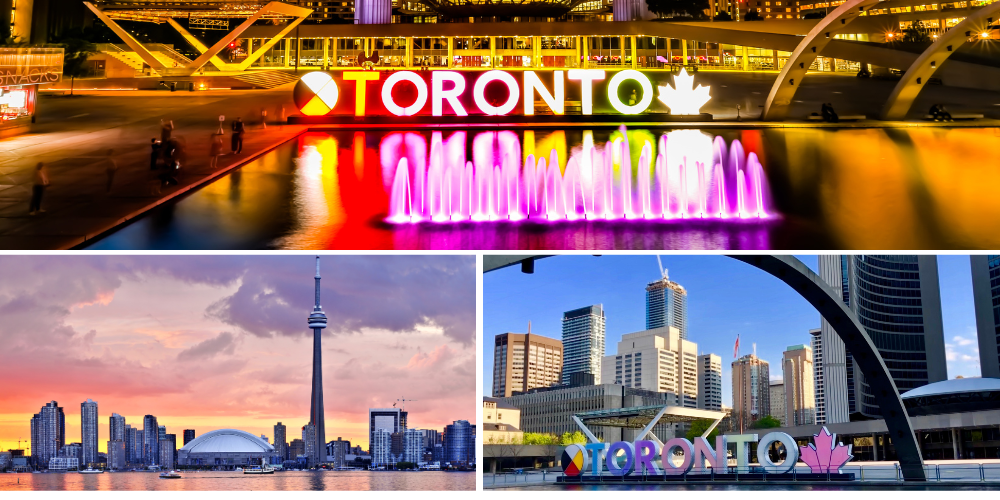
- Average 1-bed rent (downtown): ~$2,170
- Industries: Finance (Bay Street), tech (King West, MaRS Discovery District), healthcare (UHN, Sunnybrook), media
- Transit: TTC subway, GO Transit, streetcar, Pearson UP Express
- Indian infrastructure: BAPS Shri Swaminarayan Mandir on Claireville Drive, Toronto’s largest Diwali festivals at Nathan Phillips Square
Mississauga: The Family Suburb
Mississauga sits next to Brampton and absorbs spillover from both Toronto’s job market and Brampton’s housing pressure. South Asians form one of the largest visible minority groups in the city, and Mississauga ranks third in Indian-origin population in Ontario after Brampton and Toronto.
- Average 1-bed rent: ~$1,890
- Industries: Finance (Square One corridor), pharmaceuticals, head offices, Pearson Airport employers
- Transit: MiWay, GO Transit, Hurontario LRT (opening 2026)
- Indian infrastructure: Gurdwara Sahib Dixie Road, Hindu Heritage Centre, Albion Road grocery cluster
Markham: The Growth Hub
Markham reports over 78 percent visible-minority population per the 2021 Census and has become a magnet for Indian families relocating from downtown Toronto. The IBM, AMD, and Lenovo offices in Markham anchor a tech sub-cluster that hires heavily from Express Entry pools.
Pros of Ontario: Biggest Indian community in Canada. Largest job market. Shortest healthcare wait time in Canada at 19.2 weeks median (Fraser Institute, 2025). Best post-secondary network (University of Toronto, Waterloo, McMaster).
Cons of Ontario: Toronto and Mississauga housing remains expensive. The OINP overhaul on May 30, 2026 is mid-flight, so any 2026 PNP plan needs to assume the rules will keep moving. Winters are colder than BC and milder than the Prairies.
British Columbia: Highest Indian Concentration Per Capita
British Columbia has the deepest Indian roots in Canada. Sikh men from Punjab arrived in Vancouver as early as 1903, and the 1908 Komagata Maru incident is part of the province’s living memory. Today, 6.78 percent of BC residents claim Indian ethnic origin, the highest share of any province (Statistics Canada, 2021 Census).
2026 PNP allocation: 5,254 nominations, with the BC PNP running the most predictable weekly Skills Immigration draws of any province. April 22, 2026 saw 484 ITAs, including 232 to Skills Immigration candidates with SIRS scores of 138 and 252 to High Economic Impact candidates with job offers above $62 per hour (CIC News, April 2026).
Surrey: The Largest Sikh Community Outside India
Surrey is the strongest Indian city in Canada by community density. The 2021 Census recorded 212,675 South Asians, 37.8 percent of Surrey’s population, and the city holds one of the largest Sikh populations outside India. Punjabi is the second most spoken language after English.
- Indian community markers: Guru Nanak Sikh Gurdwara on 120 Avenue (one of the largest in North America), the annual Vaisakhi parade in Newton draws over 500,000 attendees, Punjabi Market on Main Street and 49th Avenue
- Average 1-bed rent: ~$1,800
- Industries: Construction, trucking, healthcare, agriculture, film production
- Transit: SkyTrain Expo Line, Surrey Central, planned Fraser Highway extension
Vancouver: Mountains, Ocean, and a Premium Price Tag
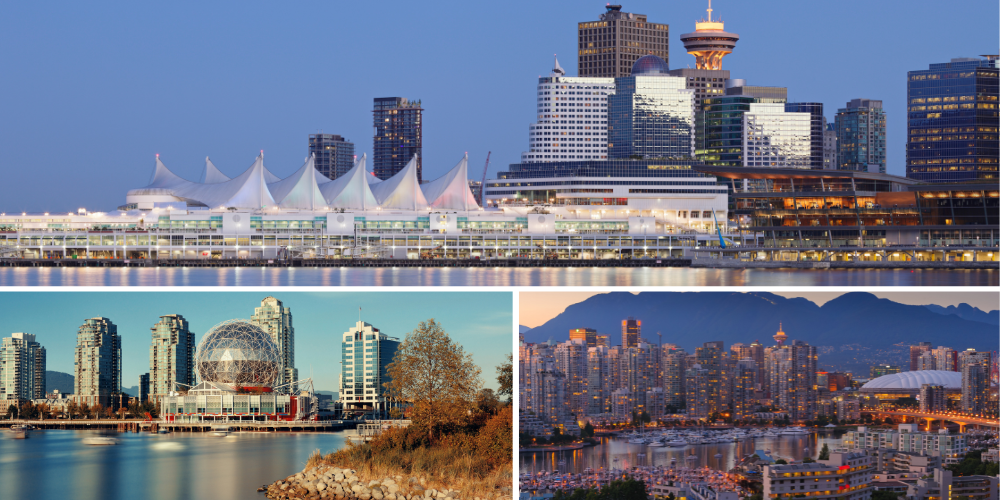
Vancouver Census Metropolitan Area counts 369,295 South Asian residents. The city itself draws Indian newcomers in tech (Amazon, Microsoft, Hootsuite, Slack), film and visual effects (Industrial Light & Magic Vancouver, DNEG), and finance.
- Average 1-bed rent (downtown): ~$2,050
- Average 2-bed rent: ~$2,360 (CMHC 2025 Rental Market Report)
- Industries: Tech, film and animation, biotech, port logistics
- Climate: Mildest in Canada. January average +4 degrees Celsius. Rain, not snow.
Abbotsford: The Quiet Punjabi Heartland
South Asians comprise approximately 23 percent of Abbotsford’s population. The city is closer to Surrey rents than Vancouver rents and has strong agriculture and trucking sectors that match Punjabi-speaking newcomers’ experience.
Pros of BC: Mildest winters in Canada. Deepest Indian community per capita. Predictable BC PNP draw cadence. Strong tech and trades demand.
Cons of BC: Vancouver and Surrey rents remain high. Healthcare wait time of 32.2 weeks (Fraser Institute, 2025). Most BC PNP streams require a job offer.
Alberta: Where Cost of Living Meets a Job-Rich Economy
Alberta’s appeal for Indian immigrants is the simplest math in this guide: lower rent, no provincial sales tax, and an economy that still hires aggressively in trades, oil and gas, and healthcare. Alberta counts 174,510 Indian-origin residents (4.39 percent of the province), with concentration in Calgary’s northeast quadrant and Edmonton’s Mill Woods neighborhood.
2026 PNP allocation: The Alberta Advantage Immigration Program (AAIP) received 6,403 nominations for 2026. Alberta’s draw model favours occupation fit over CRS score. April 14, 2026 invited 50 construction and skilled trades candidates at a minimum CRS of 60, and the Rural Renewal stream cleared at 46 in March 2026.
Calgary: The Economic Capital of the Prairies
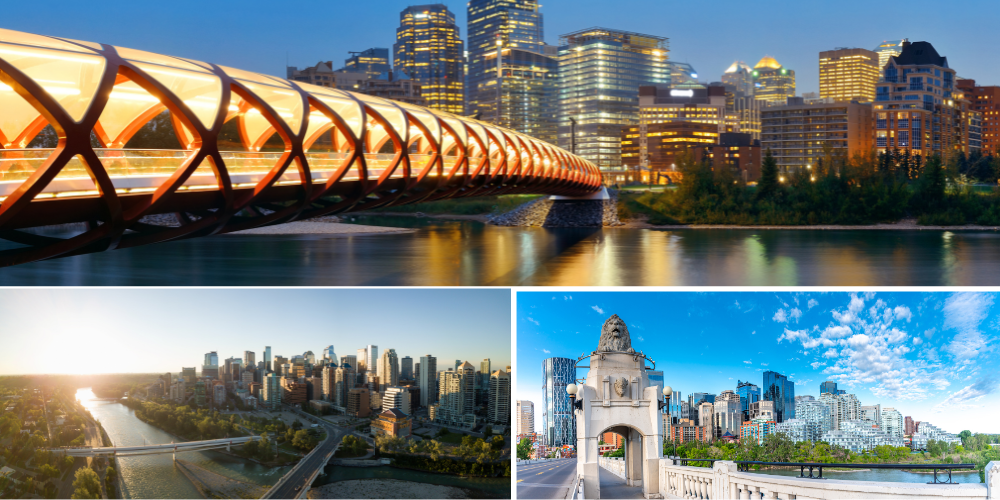
Calgary holds 153,200+ South Asian residents and ranks as the third or fourth largest Indian metropolitan community in Canada. The northeast quadrant (Falconridge, Castleridge, Saddle Ridge, Martindale) is the Indian core. Genesis Centre and the Genesis Plaza serve as community anchors.
- Indian community markers: Dashmesh Culture Centre, Sri Lakshmi Narayan Hindu Temple, Akshardham (BAPS) Calgary, Genesis Centre Diwali Mela
- Average 1-bed rent: ~$1,200
- Average 2-bed rent: ~$1,750
- Industries: Oil and gas, finance (Bow Tower corridor), agriculture, growing tech (Calgary Innovation Coalition)
- Transit: CTrain Red and Blue lines, Saddletowne and Martindale stations serve the NE
Edmonton: The Engineering Capital
Edmonton metropolitan area has approximately 123,340 South Asian residents, with Mill Woods anchoring the community. Edmonton’s economy leans on the Alberta Health Services hospitals, the University of Alberta, the petrochemical refinery row, and provincial government employment.
- Indian community markers: Mill Woods Sikh Society Gurdwara, Maharishi Vidya Mandir, Heritage Days festival
- Average 1-bed rent (downtown): ~$1,200
- Average 1-bed rent (suburbs): ~$975
- Industries: Engineering, oil sands services, healthcare, construction
- Climate: January average -11.7 degrees Celsius. Winter is real.
Pros of Alberta: No provincial sales tax. Lower rent than Ontario or BC. Strong wages in trades and energy. AAIP rewards occupation over CRS, which favours candidates who would be priced out of Express Entry.
Cons of Alberta: Cold continental winters. Healthcare wait times sit at 21 to 25 weeks. Oil-and-gas exposure makes the economy more cyclical than Ontario’s.
Manitoba and Saskatchewan: The Affordability Plays
If your goal is the cheapest path to permanent residence and the lowest first-year cost of living, the Prairies outside Alberta deserve a serious look.
Saskatchewan: Easiest PR for Overseas Indian Workers
Saskatchewan has roughly 30,000 Indian-origin residents but punches above its weight in 2026 because the SINP Priority Sectors stream is the strongest no-job-offer route in Canada. The 2026 allocation is 4,761 nominations, with 2,381 reserved for Priority Sectors (healthcare, agriculture, skilled trades, mining, manufacturing, energy, tech) (CIC News, December 2025).
- Language floor: CLB 4 for trades, CLB 5 for most other roles
- Saskatoon 2-bed rent: ~$1,400
- Indian markers: Sikh Society of Saskatchewan (Saskatoon), Hindu Society of Saskatchewan, Indian grocery on 8th Street East
- Climate: January average -16 degrees Celsius
Manitoba: Connection-Based PNP, Lowest Big-City Rent

Manitoba counts roughly 50,000 Indian-origin residents, mostly in Winnipeg. The 2026 MPNP allocation has not been published as of May 4, 2026, but Q1 2026 draws targeted candidates with provincial connections (job offer, family, prior study) almost exclusively.
- Winnipeg 2-bed rent: ~$1,500
- Indian markers: Manitoba Sikh Society Gurdwara on McPhillips, Hindu Society of Manitoba, Folklorama India Pavilion
- Industries: Manufacturing, healthcare, agriculture, transportation
- Climate: January average -16.4 degrees Celsius (the city has the second coldest big-city winters in Canada)
Pros of the Prairies: Cheapest housing of any developed Canadian region. SINP Priority Sectors works for overseas applicants without a job offer. Smaller community but tighter networks.
Cons of the Prairies: Smaller Indian diaspora than Ontario, BC, or Alberta. Long winters. Limited public transit outside Winnipeg’s main corridors.
Quebec: A Different System That Works for French Speakers
Quebec sits outside the federal PNP. It runs its own Arrima Expression of Interest portal through MIFI, and most economic streams require a Certificat de selection du Quebec (CSQ) before federal PR begins. About 75,000 Indian-origin residents live in the province, with 121,260 South Asians concentrated in Montreal.
- Parc-Extension is Montreal’s traditional Indian and Sri Lankan landing neighborhood
- Montreal 2-bed rent: ~$1,700
- Subsidized daycare: $9.35 per day in 2026
- Climate: January average -10 degrees Celsius
- Indian markers: Hindu Mission of Canada (Cote-des-Neiges), Sikh Gurdwara Quebec (LaSalle), Cavendish Mall South Asian groceries
Quebec works if you speak French at CLB 7 or higher and want lower rents than Toronto with European urban texture. Quebec does not work if you have no French. The Programme regulier des travailleurs qualifies effectively requires it, and most employers in Montreal expect bilingual fluency.
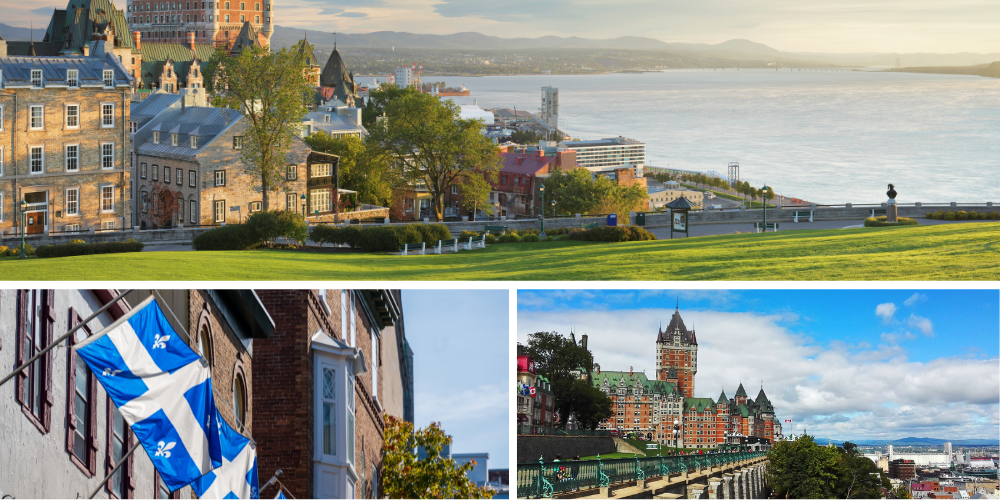
Atlantic Canada: New Brunswick, Nova Scotia, PEI, Newfoundland
The four Atlantic provinces share the federal Atlantic Immigration Program (AIP) with a combined 4,000-spot 2026 allocation, plus their own PNP streams. Indian populations are smaller (~25,000 combined across the four), but PNP draws in nursing, early childhood education, and skilled trades give Indian healthcare workers a real path.
| City | 2-bed rent | Healthcare wait time | Strongest sector |
|---|---|---|---|
| Halifax, NS | ~$1,900 | 49.0 weeks | Healthcare, finance, defence |
| Moncton, NB | ~$1,400 | 60.9 weeks | Manufacturing, trucking, healthcare |
| Charlottetown, PEI | ~$1,700 | 49.7 weeks | Tourism, agriculture, healthcare |
| St. John’s, NL | ~$1,300 | ~30 weeks | Oil and gas services, tech, public sector |
Atlantic Canada suits Indian healthcare workers, French speakers (especially in Moncton and Halifax), and graduates of Atlantic Canadian universities through the AIP. It does not suit candidates who want a large Indian community out of the gate or a deep public transit network.
Cost of Living Compared: What Indian Immigrants Actually Pay in 2026
The Canadian rental market splits into three tiers in 2026, per CMHC’s 2025 Rental Market Report:
High-cost tier (Toronto, Vancouver): Two-bedroom averages $2,300 to $2,400. A working couple with one child typically needs $5,500 to $6,500 a month after tax to live without flat-sharing.
Mid-cost tier (Calgary, Halifax, Ottawa, Mississauga, Montreal): Two-bedroom averages $1,700 to $1,900. Calgary still benefits from no provincial sales tax, dropping the effective cost of household goods 5 to 7 percent versus Ontario.
Affordability tier (Winnipeg, Saskatoon, Regina, Moncton, St. John’s, Edmonton suburbs): Two-bedroom averages $1,300 to $1,500. Smaller job markets, but the runway to financial stability is much shorter.
Beyond rent, factor in groceries (Atlantic and Prairie provinces run 5 to 12 percent below the national CPI average), provincial sales tax (zero in Alberta, 13 percent HST in Ontario, 15 percent in Atlantic), and the three-month health card waiting period in BC, Ontario, Quebec, and New Brunswick. Private health insurance during the gap typically costs $80 to $200 a month for a single person.
For a deeper view of which province balances PR pathway and cost of living best, see our companion guide on which province in Canada is best for PR in 2026.
Best PNPs for Indian Immigrants in 2026
The Provincial Nominee Program is the most reliable path for Indian applicants who do not score the highest on Express Entry alone. India accounted for 25+ percent of all Canadian PR admissions in recent years, and most successful candidates use a PNP nomination to claim 600 bonus CRS points or to bypass federal CRS scoring entirely.
Here are the four PNP streams that match Indian applicant profiles most often in 2026:
- Saskatchewan SINP Priority Sectors: Open to overseas Indian applicants in healthcare, trades, agriculture, manufacturing, and tech. CLB 4 floor for trades, CLB 5 for others. Uses its own 60/110 grid, not federal CRS.
- British Columbia PNP Tech and Skills Immigration: Weekly Skills Immigration draws and a Tech category covering 35 NOC codes. Most invitations require a valid BC job offer.
- Alberta AAIP Express Entry and Rural Renewal: Occupation-driven. Construction, healthcare, and skilled trades draws cleared as low as CRS 46-60 in 2026.
- Ontario OINP (post May 30, 2026): Shifting toward Employer Job Offer streams and exceptional-talent models. Best for Indian PGWP holders working in Ontario healthcare, tech, or trades.
For the full PNP overview, see our guide on the Provincial Nominee Program in Canada and how to check your CRS score.
Climate, Culture, and Community: Beyond the Numbers
Statistics decide where you can settle. Culture decides whether you stay.
Where the gurdwaras and temples cluster
- Ontario: Sri Guru Nanak Sikh Centre (Brampton), BAPS Shri Swaminarayan Mandir (Toronto), Hindu Sabha Mandir (Brampton), Gurdwara Sahib Dixie Road (Mississauga)
- British Columbia: Guru Nanak Sikh Gurdwara (Surrey), Vishwa Hindu Mandir (Vancouver), Gurdwara Sahib Khalsa Diwan (Vancouver)
- Alberta: Dashmesh Culture Centre (Calgary), Akshardham (Calgary), Mill Woods Sikh Society (Edmonton)
- Quebec: Hindu Mission of Canada (Montreal), Gurdwara Quebec (LaSalle)
Where Indian festivals draw the biggest crowds
- Vaisakhi parade in Surrey is the largest outside India, with 500,000+ attendees each April
- Toronto’s Diwali at Nathan Phillips Square and the Brampton Diwali Mela
- Calgary’s Genesis Centre Diwali Mela anchors Alberta’s Indian winter calendar
- Folklorama India Pavilion in Winnipeg runs through August
Where the Indian groceries are dense
Brampton’s Airport Road and Bramalea Road, Toronto’s Gerrard Street East, Mississauga’s Albion Road, Surrey’s Punjabi Market on Main Street and 49th, Calgary’s Falconridge and Saddle Ridge plazas, Edmonton’s Mill Woods Town Centre, Montreal’s Cavendish Mall, and Winnipeg’s McPhillips Street all carry full Indian grocery selections at India-comparable prices.
Where the schools work for Indian families
Ontario’s school boards (Peel District, Toronto District, York Region District) consistently produce the highest South Asian enrolment rates in Canada and offer International Languages programs in Punjabi, Hindi, Urdu, Tamil, and Gujarati. BC’s Surrey School District runs Punjabi as a second-language option in multiple high schools. Alberta’s Edmonton Public Schools run a bilingual Punjabi-English program at Mill Woods.
For broader settlement planning, see our guide on Toronto diversity and the moving to another province checklist.
Healthcare for Indian Newcomers: What to Know in 2026
Public health insurance varies by province, and the wait period for a new resident is the detail older guides skip. As of 2026:
- Ontario: OHIP, three-month wait. See our guide on how to apply for OHIP.
- British Columbia: MSP, three-month wait, $0 monthly premium since 2020
- Alberta: AHCIP, no wait period for permanent residents from day one
- Quebec: RAMQ, three-month wait
- Saskatchewan, Manitoba, Atlantic provinces: Most start coverage within the same calendar month or the following month
Check Out Top 10 Cities For Immigrants In CANADA:
If you are arriving with school-age children, factor in private dental and vision (most provinces do not cover these for adults), and budget $80 to $200 per month for a private health bridge plan during any wait period. The federal government also runs the Canadian Dental Care Plan for residents under specific income thresholds, expanded in 2024.
Frequently Asked Questions
Which is the best province in Canada for Indian immigrants in 2026?
Ontario remains the best province for Indian immigrants in 2026 by community size, job market depth, and PNP allocation (14,119 in 2026). For per-capita Indian community density, British Columbia leads at 6.78 percent of the provincial population. For lowest cost of living plus a viable PR route, Saskatchewan and Manitoba are the strongest picks.
Which Canadian city has the most Indians?
Brampton, Ontario has the highest concentration of Indian-origin residents in Canada. The 2021 Census recorded 180,295 Indian-origin residents (27.7 percent of the city). The Greater Toronto Area as a whole counts over 800,000 South Asians, and Surrey, British Columbia ranks second at 212,675 South Asians (37.8 percent of Surrey’s population).
Where do most Punjabis live in Canada?
Surrey, British Columbia and Brampton, Ontario hold the largest Punjabi communities in Canada. Punjabi is the third most spoken mother tongue in the country at 2.59 percent of all speakers. Surrey’s Vaisakhi parade is the largest outside India.
What is the cheapest province in Canada to live for Indian immigrants?
Saskatchewan, Manitoba, and Atlantic Canada (especially New Brunswick and Newfoundland) are the cheapest provinces. Two-bedroom rents average $1,300 to $1,500 in Winnipeg, Saskatoon, Regina, Moncton, and St. John’s, compared with $2,300 to $2,400 in Toronto and Vancouver.
Which Canadian province has the easiest PR for Indians without a job offer?
Saskatchewan is the easiest province for Indian applicants without a Canadian job offer in 2026. The SINP Priority Sectors stream accepts overseas applicants in healthcare, trades, agriculture, mining, manufacturing, energy, and tech, requires only CLB 4 to CLB 5, and uses its own 60/110 grid instead of federal CRS.
Is Brampton a good place to live for Indian immigrants?
Brampton is the densest Indian city in North America by share of population. It offers strong cultural infrastructure (gurdwaras, temples, Punjabi grocery, Indian schools), lower rent than Toronto, and direct GO Transit links to downtown jobs. The trade-off is heavy traffic on Highway 410 and Highway 401 during commute hours, and a tighter rental market than Hamilton or Kitchener.
How much money do Indians need to move to Canada in 2026?
Express Entry proof-of-funds requirements for 2026 range from CAD $14,690 for a single applicant to CAD $39,166 for a family of seven, set by IRCC. Beyond proof of funds, plan for first and last month’s rent ($2,000 to $5,000 depending on city), provincial health insurance gap coverage ($80 to $200 a month), school registration costs, and three to six months of living expenses while you find work.
Do Indian credentials get recognized in Canada?
Most regulated professions (medicine, nursing, engineering, pharmacy, law, accounting) require credential assessment through World Education Services (WES), International Credential Assessment Service of Canada (ICAS), or a profession-specific regulator. Engineers Canada, the Medical Council of Canada, and the National Nursing Assessment Service handle the largest Indian applicant volumes. Plan for 6 to 18 months of additional licensing work.
Which province has the largest Indian student population?
Ontario hosts the largest Indian student population by absolute count, with the University of Toronto, University of Waterloo, McMaster University, and the Conestoga, Sheridan, and Seneca colleges drawing the highest enrolment. British Columbia (UBC, SFU, BCIT) and Manitoba (University of Manitoba, Red River College) round out the top three.
Final Word: Match the Province to Your Profile
The right answer to “best place to live in Canada for Indian immigrants” is not Toronto or Brampton or Surrey. It is the city whose 2026 stream rules, occupation list, language threshold, rent profile, and community fit match what you actually bring to Canada.
If you have family in the GTA or a tech offer in Mississauga, Ontario is the answer. If you are a Punjabi-speaking trades worker with cousins in Surrey, BC is the answer. If you have a nursing license in progress and want the fastest PR route, Saskatchewan is the answer. If you want the lowest rent and a small but stable community, Winnipeg or Moncton.
Use the five-question decision tree at the top, then match the province profile that fits. Bookmark IRCC’s PNP page and the relevant provincial site, because draw rules and allocations are still moving in 2026.
For more on the immigration side, see our guides on getting PR in Canada, applying for Express Entry, and the provincial nominee program. Once you arrive, the moving to another province checklist and the provinces with the most Indian population cover the next steps on the ground.
Sources and Primary References

- Statistics Canada, Portrait of the South Asian Populations in Canada (2025)
- Statistics Canada, 2021 Census of Population
- IRCC 2026-2028 Immigration Levels Plan
- Moving2Canada 2026 PNP Allocations by Province
- CIC News, December 2025: Saskatchewan PNP 2026 changes
- CIC News, April 2026: BC targets skilled workers
- CMHC 2025 Rental Market Report
- Fraser Institute, Waiting Your Turn: Wait Times for Health Care in Canada (2025)
- Statistics Canada, Brampton 2021 Census Profile
- Government of Saskatchewan, SINP
- Province of British Columbia, BC PNP
- Government of Alberta, AAIP
- Government of Ontario, OINP